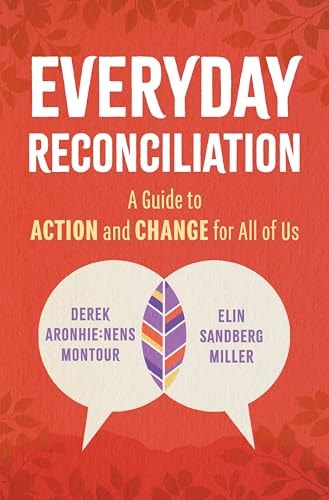
Everyday Reconciliation – A Guide to Action and Change for All of Us
Original price was: $5.24.$2.99Current price is: $2.99.
Together, two friends with vastly different backgrounds share their vision for a reconciled country–one in which small, daily actions can make a monumental difference
Derek Aronhie:nens Montour is an Indigenous man who grew up on the Kahnawà:ke Kanien’kehá:ka Territory. Elin Sandberg Miller is a non-Indigenous woman and immigrant to Canada. Here, they share their alternating experiences and perspectives with nuance and vulnerability, providing an accessible and candid discussion that invites readers to consider the power of reconciliation in their everyday lives. The result is a clear and insightful guide for non-Indigenous Canadians who want to contribute to the national reconciliation process but don’t know where to start.
Through thirteen wide-ranging essays, Montour and Miller imagine what reconciliation would look like on a practical level, driven by people, not governments. Together, they tackle an urgent and compelling range of subjects, including asking tough questions about home, land, culture, language and more. Can non-Indigenous people wear beaded earrings? Should they give their land back? What about land acknowledgements? Is it okay to attend a powwow? The resulting answers are thoughtful, encouraging and considered, providing non-Indigenous people with the practical tools to enact essential and meaningful change. This an empowering call to action–and one that equips all of us to become a part of our own everyday reconciliation.