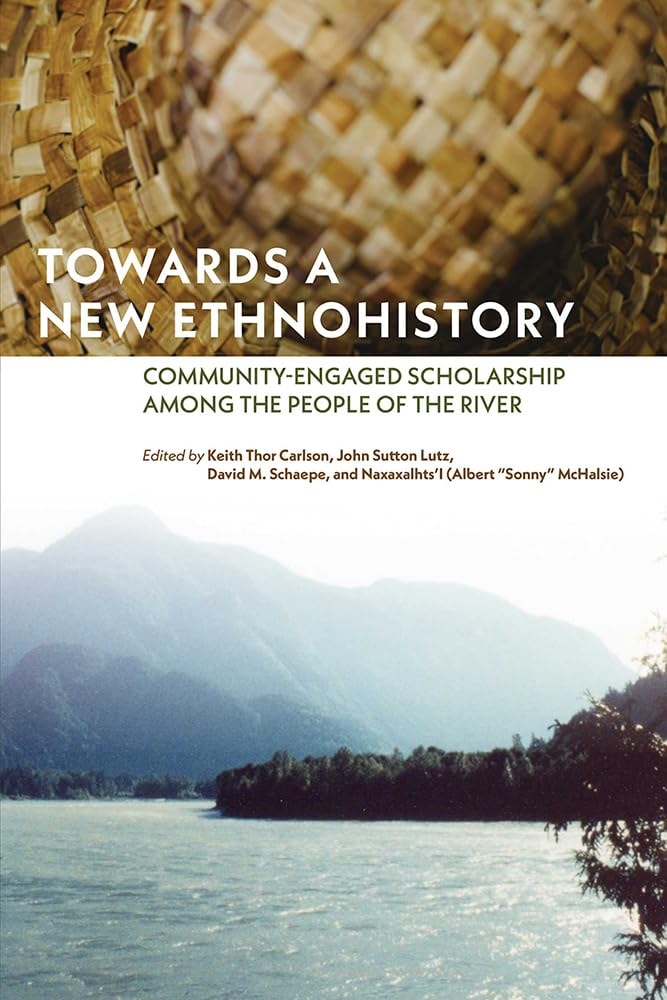
Towards a New Ethnohistory Community-Engaged Scholarship Among the People of the River
Original price was: $4.18.$2.99Current price is: $2.99.
Towards a New Ethnohistory engages respectfully in cross-cultural dialogue and interdisciplinary methods to co-create with Indigenous people a new, decolonized ethnohistory. This new ethnohistory reflects Indigenous ways of knowing and is a direct response to critiques of scholars who have for too long foisted their own research agendas onto Indigenous communities. Community-engaged scholarship invites members of the Indigenous community themselves to identify the research questions, host the researchers while they conduct the research, and participate meaningfully in the analysis of the researchers’ findings.
The historical research topics chosen by the Stó lō community leaders and knowledge keepers for the contributors to this collection range from the intimate and personal, to the broad and collective. But what principally distinguishes the analyses is the way settler colonialism is positioned as something that unfolds in sometimes unexpected ways within Stó lō history, as opposed to the other way around.
This collection presents the best work to come out of the world’s only graduate-level humanities-based ethnohistory field school. The blending of methodologies and approaches from the humanities and social sciences is a model of twenty-first century interdisciplinarity.