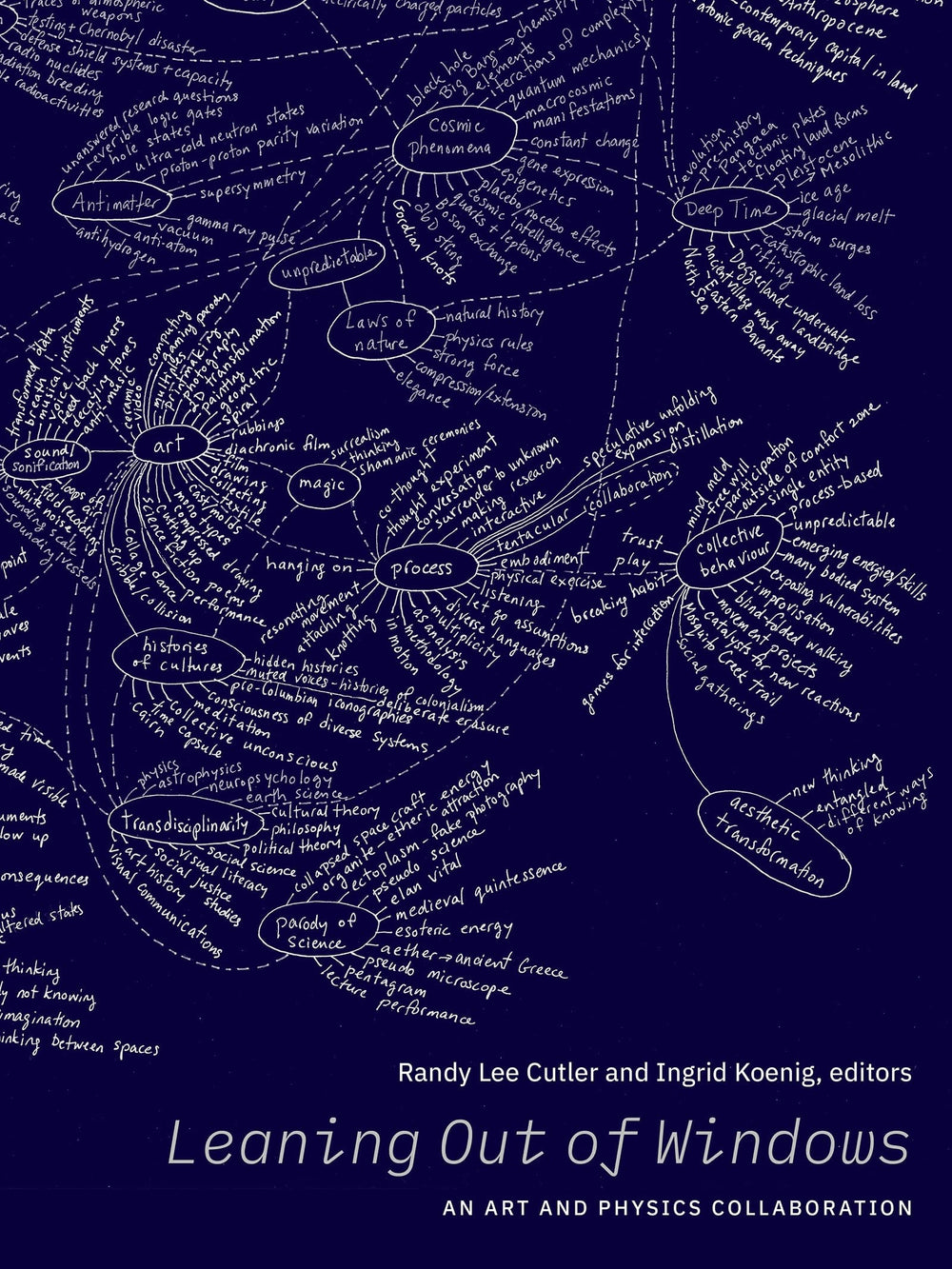
Leaning Out of Windows An Art and Physics Collaboration
Original price was: $6.74.$3.99Current price is: $3.99.
Art and physics collide in this expansive exploration of how knowledge can be translated across disciplinary communities to activate new aesthetic and scientific perspectives.
Leaning Out of Windows shares findings from a six-year collaboration by a group of artists and physicists exploring the connections and differences between the language they use, the means by which they develop knowledge, how that knowledge is visualized, and, ultimately, how they seek to understand the universe. Physicists from TRIUMF, Canada’s particle physics accelerator, presented key concepts in the physics of Antimatter, Emergence, and In/visible Forces to artists convened by Emily Carr University of Art + Design; the participants then generated conversations, process drawings, diagrams, field notes, and works of art. The “wondrous back-and-forth” of this process allowed both scientists and artists to, as Koenig and Cutler describe, “lean out of our respective fields of inquiry and inhabit the infinite spaces of not knowing.”
From this leaning into uncertainty comes a rich array of work towards furthering the shared project of artists and scientists in shaping cultural understandings of the universe: Otoniya J. Okot Bitek reflects on the invisible forces of power; Jess H. Brewer contemplates emergence, free will, and magic; Mimi Gellman looks at the resonances between Indigenous Knowledge and physics; Jeff Derksen finds Hegelian dialectics within the matter-antimatter process; Sanem Guvenc considers the possibilities of the void; Nirmal Raj ponders the universe’s “special moment of light and visibility” we happen to inhabit; Sadira Rodrigues eschews the artificiality of the lab for a ‘boring berm of dirt’; and Marina Roy metaphorically turns beams of stable and radioactive gold particles into art of pigments, oils, liquid plastic, and wood. Combined with additional essays, diagrams, and artworks, these texts and artworks live in the intersection of disparate fields that nonetheless share a deep curiosity of the world and our place within it, and a dedication to building and sharing knowledges.