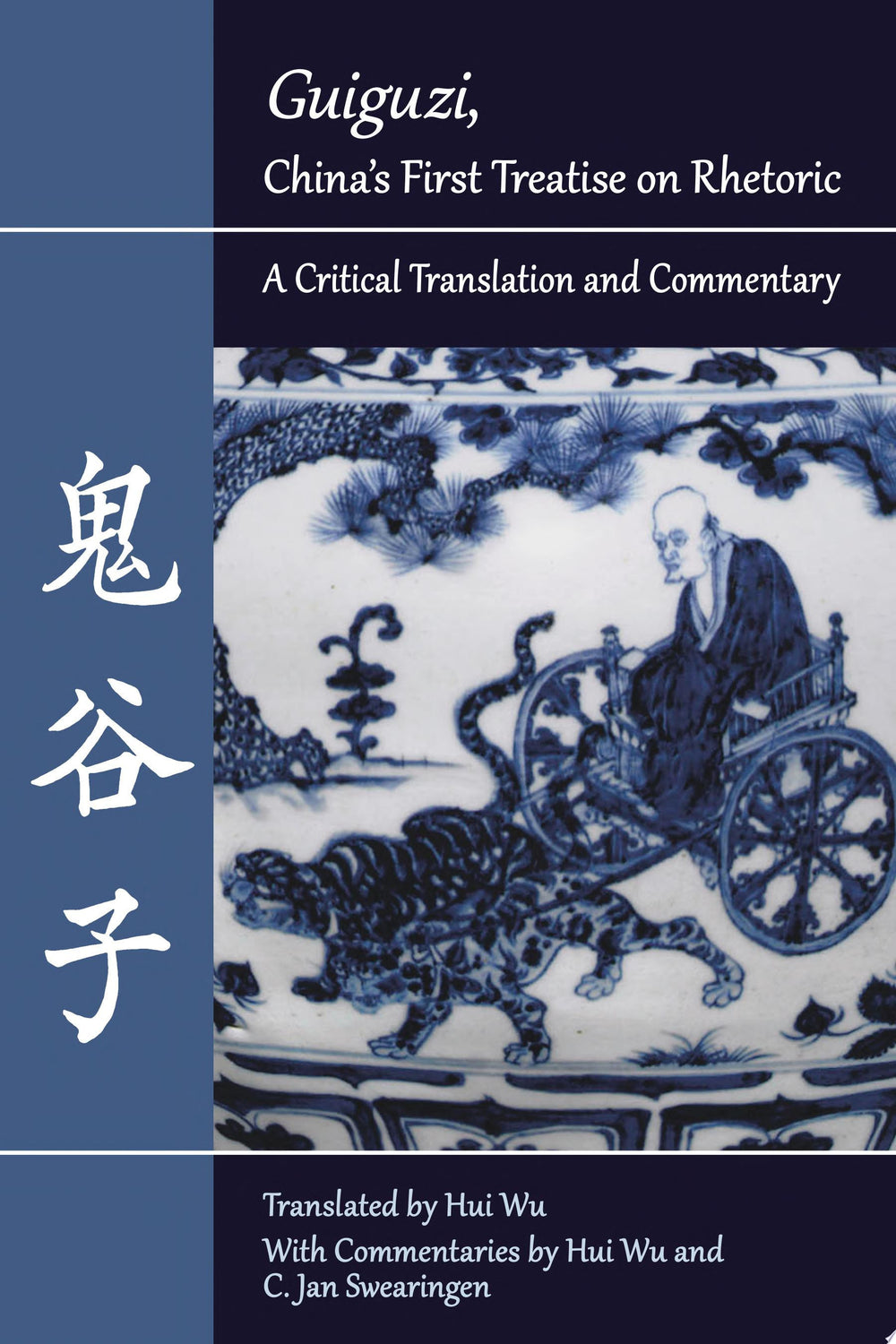
“Guiguzi,” China’s First Treatise on Rhetoric A Critical Translation and Commentary
Original price was: $10.05.$5.99Current price is: $5.99.
When Gorgias, Plato, and Aristotle were discussing and defining rhetoric in ancient Greece, many students in China, including Sun Bin, a descendent of Sun Tzu, who wrote The Art of War, were learning the techniques of persuasion from Guiguzi, “the Master of the Ghost Valley.” This pre-Qin dynasty recluse provided the basis for what is considered the earliest Chinese treatise devoted entirely to the art of persuasion. Called Guiguzi after its author, this translation of the received text provides an indigenous rhetorical theory and key persuasive strategies, some of which are still used by those involved in decision making and negotiations in China today. In “Guiguzi,” China’s First Treatise on Rhetoric, Hui Wu and C. Jan Swearingen present a new critical translation of this foundational work, which has great historical significance for the study of Chinese rhetoric and communication and yet is little known to Western readers.
Wu’s translation includes footnotes that incorporate both past and present scholarly commentary, and is accompanied by a prefatory introduction that situates Guiguzi in the sociopolitical and cultural realities of ancient China, and a glossary of rhetorical terms used in the treatise. Swearingen presents a comparative study suggesting the similarities and differences between emerging Greek and Chinese rhetorics during the same period, including the cultural contexts of warring states and emergent empires that surrounded each.
“Guiguzi,” China’s First Treatise on Rhetoric combines a new translation of a historically significant text with scholarly analysis and critical apparatus that will contribute to the emerging global understanding of Chinese rhetoric and communication.