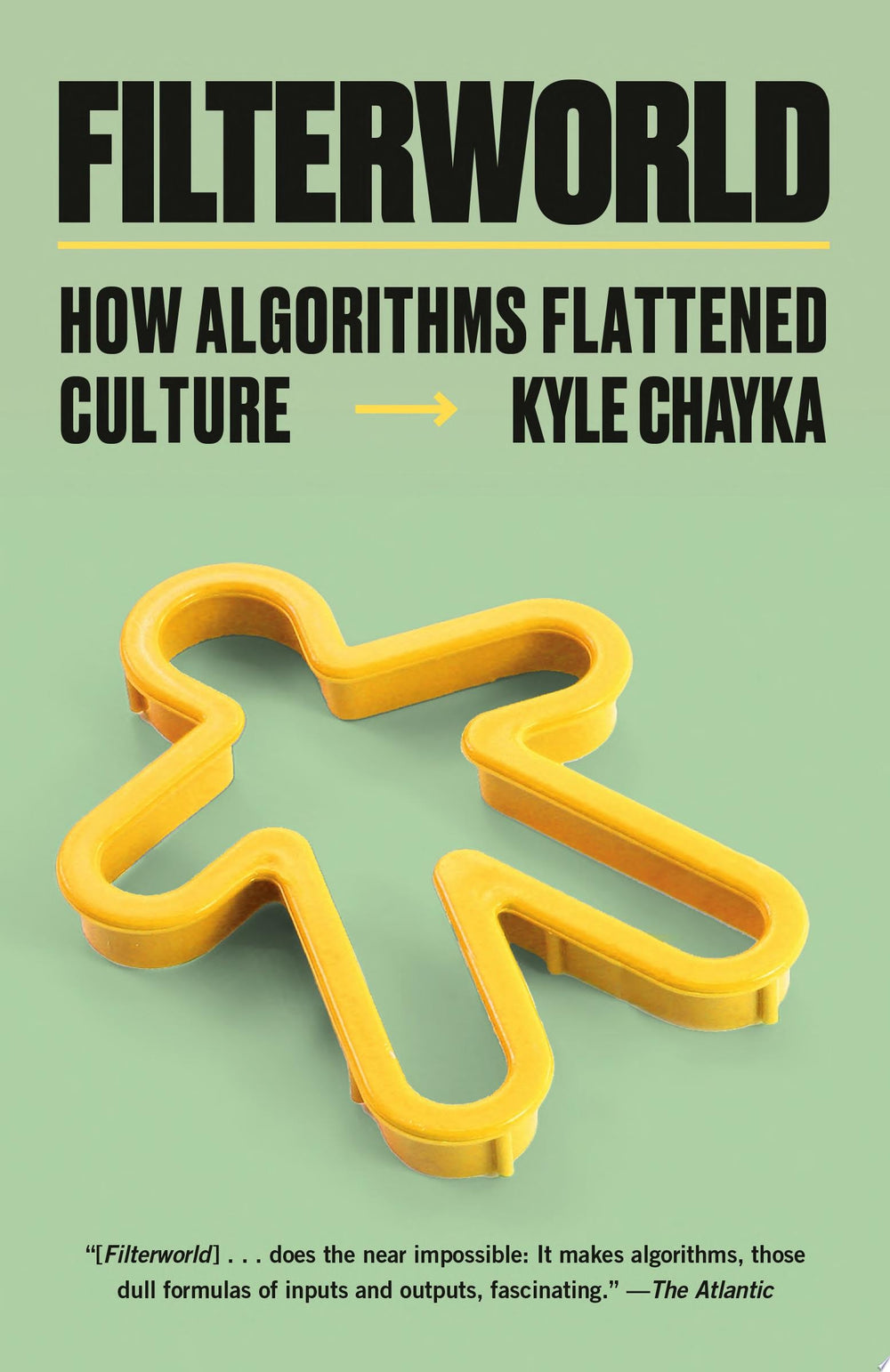
Filterworld How Algorithms Flattened Culture
Original price was: $3.89.$1.99Current price is: $1.99.
From New Yorker staff writer and author of The Longing for Less Kyle Chayka comes a timely history and investigation of a world ruled by algorithms, which determine the shape of culture itself.
From trendy restaurants to city grids, to TikTok and Netflix feeds the world round, algorithmic recommendations dictate our experiences and choices. The algorithm is present in the familiar neon signs and exposed brick of Internet cafes, be it in Nairobi or Portland, and the skeletal, modern furniture of Airbnbs in cities big and small. Over the last decade, this network of mathematically determined decisions has taken over, almost unnoticed-informing the songs we listen to, the friends with whom we stay in touch-as we’ve grown increasingly accustomed to our insipid new normal.
This ever-tightening web woven by algorithms is called “Filterworld.” Kyle Chayka shows us how online and offline spaces alike have been engineered for seamless consumption, becoming a source of pervasive anxiety in the process. Users of technology have been forced to contend with data-driven equations that try to anticipate their desires-and often get them wrong. What results is a state of docility that allows tech companies to curtail human experiences-human lives-for profit. But to have our tastes, behaviors, and emotions governed by computers, while convenient, does nothing short of call the very notion of free will into question.
In Filterworld, Chayka traces this creeping, machine-guided curation as it infiltrates the furthest reaches of our digital, physical, and psychological spaces. With algorithms increasingly influencing not just what culture we consume, but what culture is produced, urgent questions arise: What happens when shareability supersedes messiness, innovation, and creativity-the qualities that make us human? What does it mean to make a choice when the options have been so carefully arranged for us? Is personal freedom possible on the Internet?
To the last question, Filterworld argues yes-but to escape Filterworld, and even transcend it, we must first understand it.