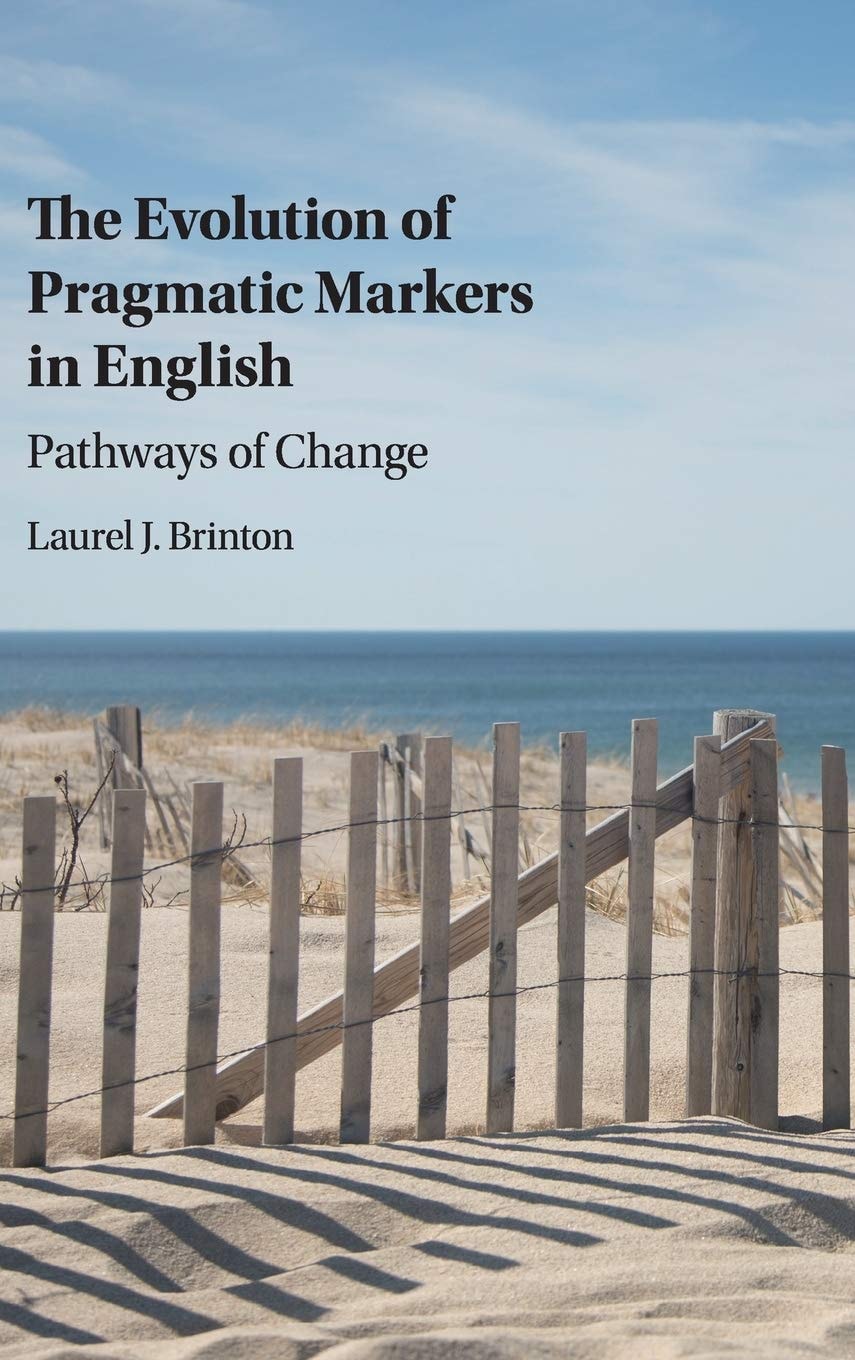
The Evolution of Pragmatic Markers in English Pathways of Change
Original price was: $22.45.$10.99Current price is: $10.99.
3.3.1 From Predicate Adverb to Sentential Adverb and Pragmatic Marker — 3.3.2 From Adverb to Adjective — 3.4 Accounting for the Change — 3.4.1 Aspects of Unidirectionality — 3.4.2 Possible Explanations for the Directionality of Changes in Whilom — 3.4.2.1 Degrammaticalization. — 3.4.2.2 Lexicalization. — 3.4.2.3 Word Formation. — 3.4.2.4 Gradience. — 3.5 Conclusion — 4 Modern English Only and If Only — 4.1 Introduction — 4.2 Conjunctive Only in Present-Day English — 4.2.1 ‘Adversative’ vs. ‘Exceptive’ Uses — 4.2.2 Comparison with But That, Except That, and Save That — 4.2.3 Only as a Pragmatic Marker — 4.3 The Development of Only — 4.3.1 The Rise of Conjunctive Uses — 4.3.2 Grammaticalization — 4.4 If Only — 4.4.1 Insubordinated Clauses — 4.4.2 Development of If Only — 4.5 Conclusion — Part II From Clausal Construction to Pragmatic Marker — 5 Epistemic Parentheticals — 5.1 Introduction — 5.2 First-Person Epistemic Parentheticals in Present-Day English — 5.2.1 Epistemic Meaning — 5.2.2 Subjective Meaning — 5.2.3 Evidential Meaning — 5.2.4 Interpersonal Meaning — 5.3 The History of Epistemic Parentheticals: Review of Previous Studies — 5.3.1 Excursus on Wierzbicka (2006) — 5.4 Epistemic Marking in Middle English — 5.4.1 First-Person Epistemic Parentheticals — 5.4.2 Epistemic Adverbials — 5.5 First-Person Epistemic Parentheticals in Chaucer — 5.5.1 Frequency and Position — 5.5.2 Contexts of Occurrence in Discourse and Narration — 5.6 Development of First-Person Epistemic Parentheticals — 5.6.1 Epistemic Forms in Old English — 5.6.1.1 Epistemic Adverbials. — 5.6.1.2 Epistemic Periphrastic Constructions. — 5.6.1.3 Epistemic Parentheticals. — 5.6.2 Syntactic Development: From Main Clause to Parenthetical — 5.6.3 Semantic Development: From Evidential to Epistemic — 5.6.4 Grammaticalization or Lexicalization?