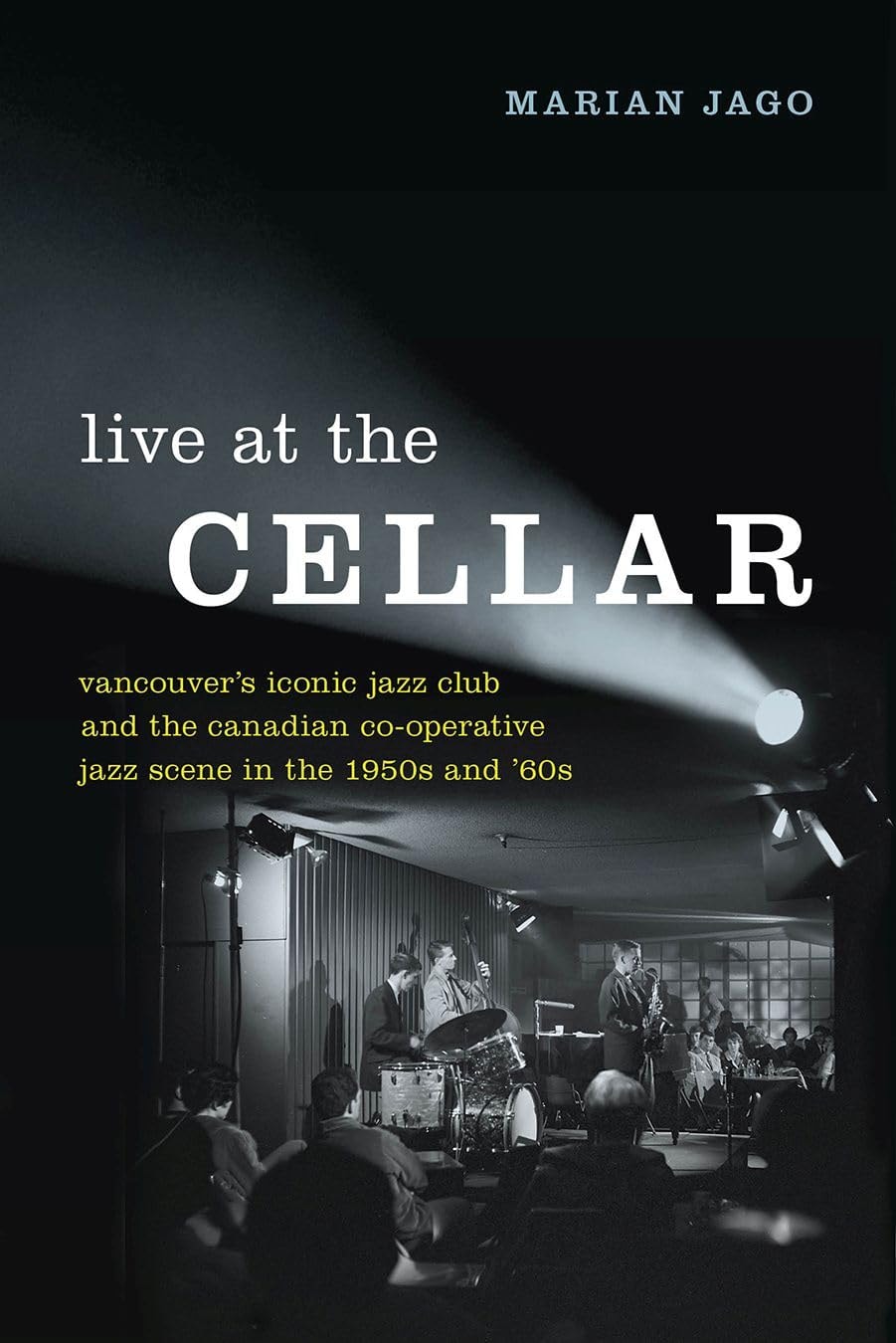
Live at the Cellar Vancouver’s Iconic Jazz Club and the Canadian Co-operative Jazz Scene in the 1950s and ’60s
Original price was: $4.48.$2.99Current price is: $2.99.
In the 1950s and ’60s, co‐operative jazz clubs such as Vancouver’s Cellar, Edmonton’s Yardbird Suite, and Halifax’s 777 Barrington Street opened their doors in response to new forms of jazz expression emerging after the war and a lack of available performance spaces outside major urban centres. Operated on a not‐for-profit basis by the musicians themselves, these hip new clubs created spaces where young jazz musicians could practise their art close to home.
Live at the Cellar looks at this unique period in the development of jazz in Canada. Centered on Vancouver’s legendary Cellar club, and including co-ops in four other cities, it explores the ways in which these clubs functioned as sites for the performance and exploration of jazz as well as magnets for countercultural expression in other arts, such as literature, theatre, and film. Marian Jago’s deft combination of new, original research with archival evidence, interviews, and photographs allows us to witness the beginnings of a pan-Canadian jazz scene as well as the emergence of key Canadian jazz figures, such as P.J. Perry, Don Thompson, and Terry Clarke, and the rise of jazz icons such as Paul Bley and Ornette Coleman. Although the Cellar and other jazz co-ops are long shuttered, in their day they created a new and infectious energy that still reverberates in Canada’s jazz scene today.