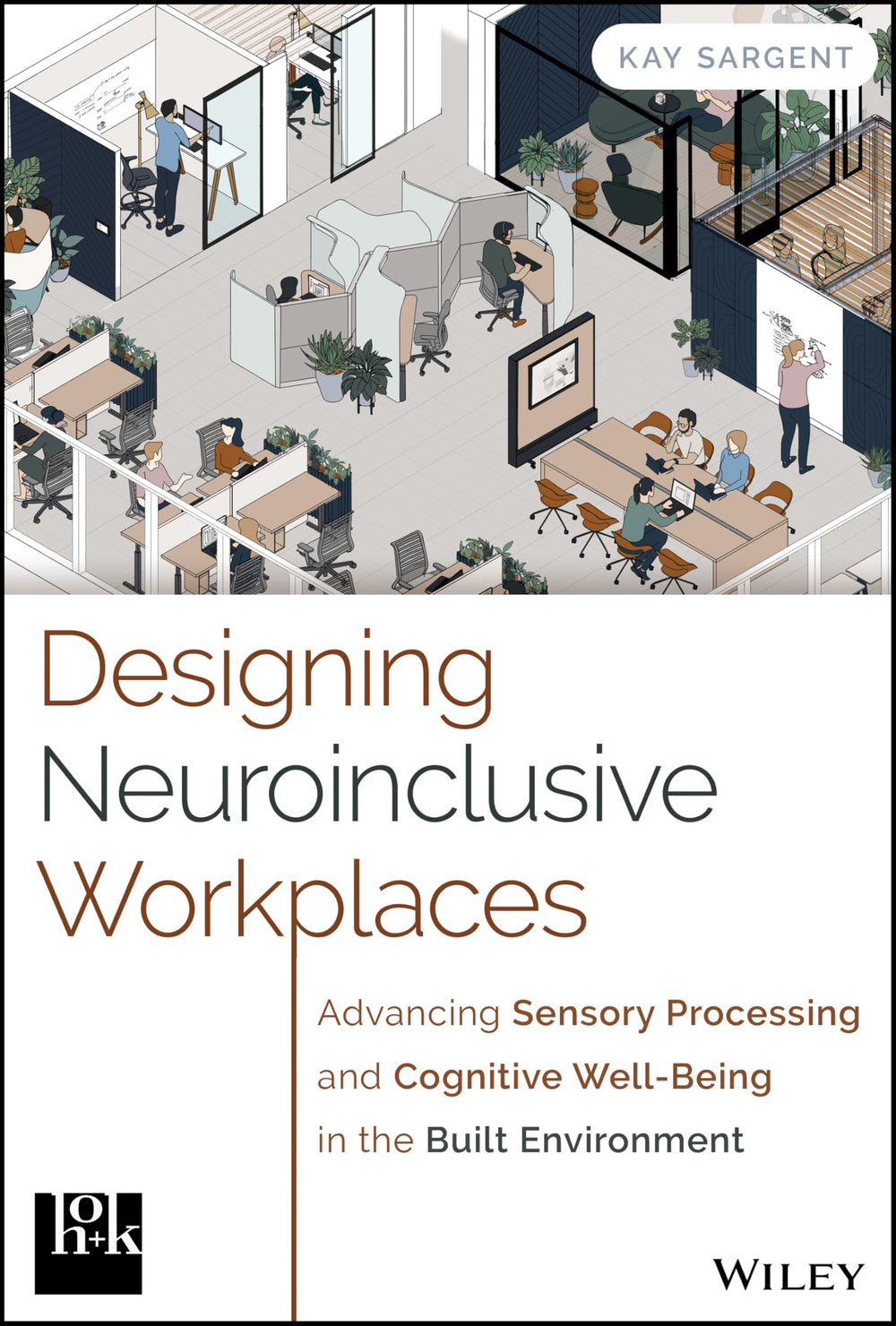
Designing Neuroinclusive Workplaces Advancing Sensory Processing and Cognitive Well-Being in the Built Environment
Original price was: $9.88.$4.99Current price is: $4.99.
Assist the growing neurodivergent population with strategic adjustments to physical spaces
Designing Neuroinclusive Workplaces: Advancing Sensory Processing and Cognitive Well-Being in the Built Environment explores how to employ strategic spatial zoning and sequencing, sensory zones, patterns, textures, colors, lighting, and soundscaping to create spaces that cater to the various sensory needs of neurodivergent individuals, who now make up 1/5 of the world’s population. This group possesses unique strengths that can be harnessed if they are in environments designed to be welcoming and supportive of their needs.
Written by Kay Sargent of HOK, a leader in the field of workplace design and architecture, this groundbreaking book argues that even minor adjustments to physical spaces can drive giant improvements in cognitive function, fulfillment, and belonging for both neurodivergent and neurotypical individuals.
Some of the topics explored in this book include:
- Reimagining the design of offices and workplaces through a neuroinclusive lens
- Optimizing spaces to accommodate hypersensitivities across all six work modalities, ranging from focused tasks to collaborative endeavors
- Inclusion practices to boost productivity in the workplace and transform high-stress environments into more welcoming and functional spaces for everyone
Filled with practical, actionable strategies for designing spaces that embrace and empower individuals across the neurodiversity spectrum, Designing Neuroinclusive Workplaces is a timely, essential read for all forward-thinking HR, DEI, and accessibility teams, as well as architects and interior designers.