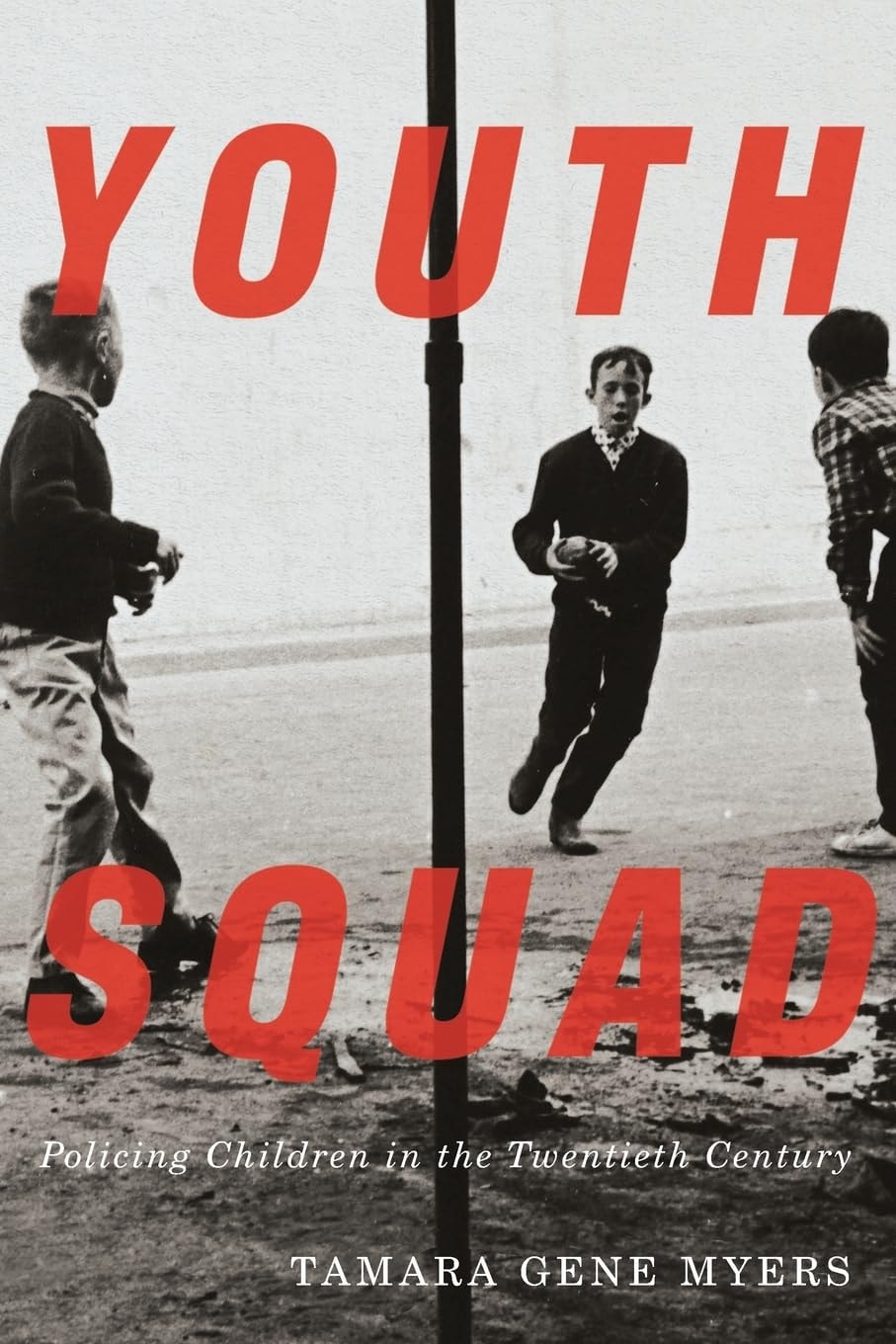
Youth Squad Policing Children in the Twentieth Century
Original price was: $4.93.$2.99Current price is: $2.99.
Starting in the 1930s, urban police forces from New York City to Montreal to Vancouver established youth squads and crime prevention programs, dramatically changing the nature of contact between cops and kids. Gone was the beat officer who scared children and threatened youth. Instead, a new breed of officer emerged whose intentions were explicit: befriend the rising generation. Good intentions, however, produced paradoxical results. In Youth Squad Tamara Gene Myers chronicles the development of youth consciousness among North American police departments. Myers shows that a new comprehensive strategy for crime prevention was predicated on the idea that criminals are not born but made by their cultural environments. Pinpointing the origin of this paradigmatic shift to a period of optimism about the ability of police to protect children, she explains how, by the middle of the twentieth century, police forces had intensified their presence in children’s lives through juvenile curfew laws, police athletic leagues, traffic safety and anti-corruption campaigns, and school programs. The book describes the ways that seemingly altruistic efforts to integrate working-class youth into society evolved into pervasive supervision and surveillance, normalizing the police presence in children’s lives. At the intersection of juvenile justice, policing, and childhood history, Youth Squad reveals how the overpolicing of young people today is rooted in well-meaning but misguided schemes of the mid-twentieth century.