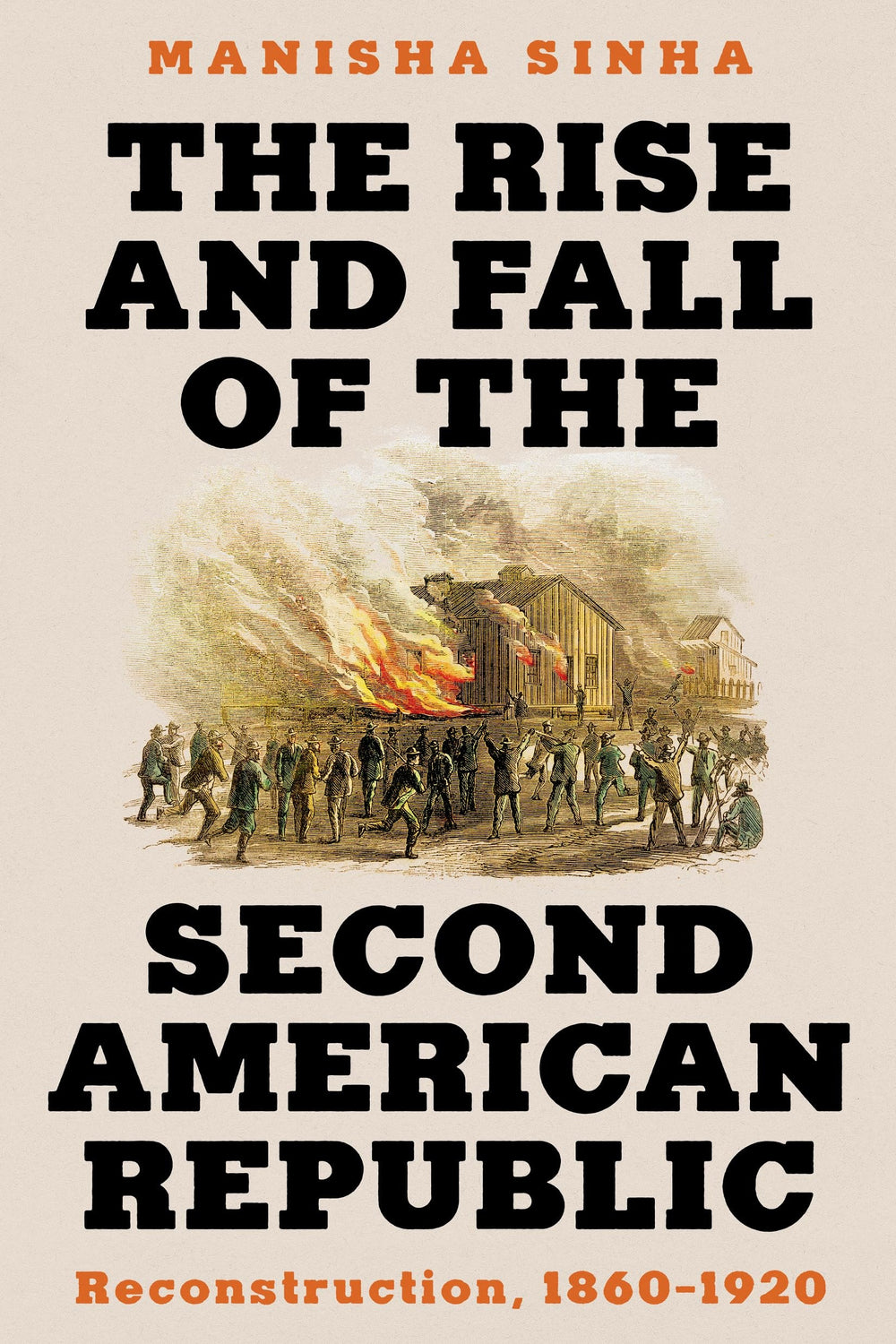
The Rise and Fall of the Second American Republic Reconstruction, 1860-1920
Original price was: $3.89.$1.99Current price is: $1.99.
We are told that the present moment bears a strong resemblance to Reconstruction, the era after the Civil War when the victorious North attempted to create an interracial democracy in the unrepentant South. That effort failed–and that failure serves as a warning today about violent backlash to the mere idea of black equality.
In The Rise and Fall of the Second American Republic, acclaimed historian Manisha Sinha expands our view beyond the accepted temporal and spatial bounds of Reconstruction, which is customarily said to have begun in 1865 with the end of the war, and to have come to a close when the “corrupt bargain” of 1877 put Rutherford B. Hayes in the White House in exchange for the fall of the last southern Reconstruction state governments. Sinha’s startlingly original account opens in 1860 with the election of Abraham Lincoln that triggered the secession of the Deep South states, and take us all the way to 1920 and the ratification of the Nineteenth Amendment, which granted women the right to vote–and which Sinha calls the “last Reconstruction amendment.”
Within this grand frame, Sinha narrates the rise and fall of what she calls the “Second American Republic.” The Reconstruction of the South, a process driven by the alliance between the formerly enslaved at the grassroots and Radical Republicans in Congress, is central to her story, but only part of it. As she demonstrates, the US Army’s conquest of Indigenous nations in the West, labor conflict in the North, Chinese exclusion, women’s suffrage, and the establishment of an overseas American empire were all part of the same struggle between the forces of democracy and those of reaction. The main concern of Reconstruction was the plight of the formerly enslaved, but its fall affected other groups as well: women, workers, immigrants, and Native Americans. From the election of black legislators across the South in the late 1860s to the Great Railroad Strike of 1877 to the colonial war in the Philippines in the 1890s, Sinha narrates the major episodes of the era and introduces us to key individuals, famous and otherwise, who helped remake American democracy, or whose actions spelled its doom.
A sweeping narrative that remakes our understanding of perhaps the most consequential period in American history, The Rise and Fall of the Second American Republic shows how the great contest of that age is also the great contest of our age–and serves as a necessary reminder of how young and fragile our democracy truly is.