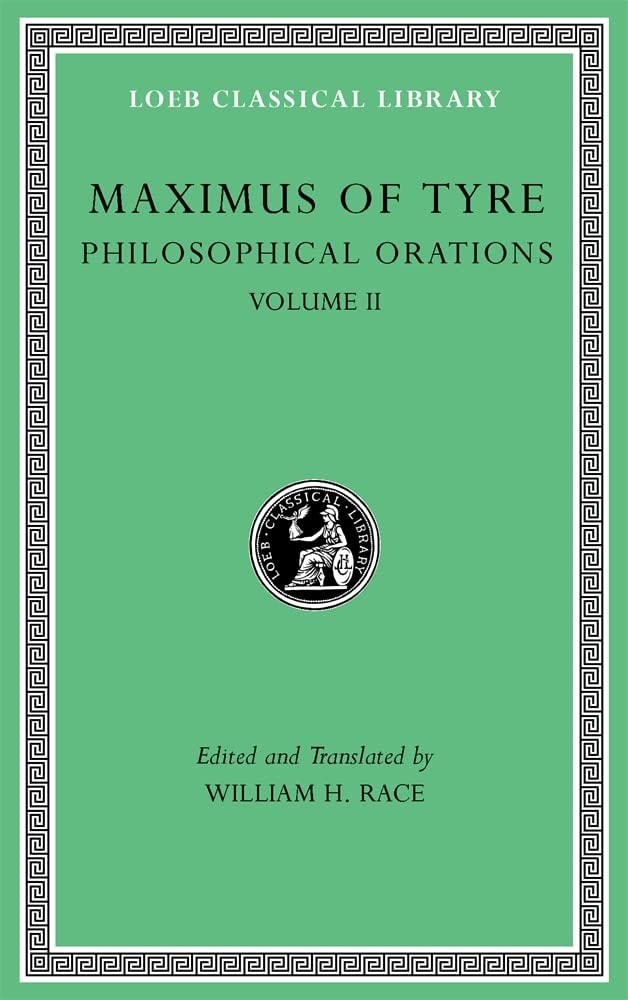
Philosophical Orations
Original price was: $5.99.$2.99Current price is: $2.99.
A Platonic evangelist’s lectures on the good life.
Maximus of Tyre, active probably in the latter half of the second century AD, was a devoted Platonist whose only surviving work consists of forty-one brief addresses on various topics of ethical, philosophical, and theological import including the nature of divinity, the immortality of the soul, the sources of good and evil, the injustice of vengeance, the tyranny of pleasures and desires, the contribution of the liberal arts, and the pursuit of happiness, among many others. These addresses are conveniently labeled orations, but their fluid and hybrid style resists precise generic categorization, so that they could also be called discourses, speeches, lectures, talks, inquiries, essays, or even sermons.
In his orations Maximus strove to elucidate the philosophical life of virtue, especially as exemplified in the career of Socrates and in the writings of Plato, inviting his audience, sometimes addressed as young men, to share in his knowledge, to appreciate his fresh presentation of philosophical topics, and perhaps even to join him in pursuing philosophy. Drawing on the Hellenic cultural tradition from Homer to the death of Alexander the Great, Maximus offers a rich collection of the famous philosophical, literary, and historical figures, events, ideas, successes, and failures that constituted Greek paideia in the so-called Second Sophistic era.
This edition of Maximus’ Philosophical Orations offers a fresh translation, ample annotation, and a text fully informed by current scholarship.