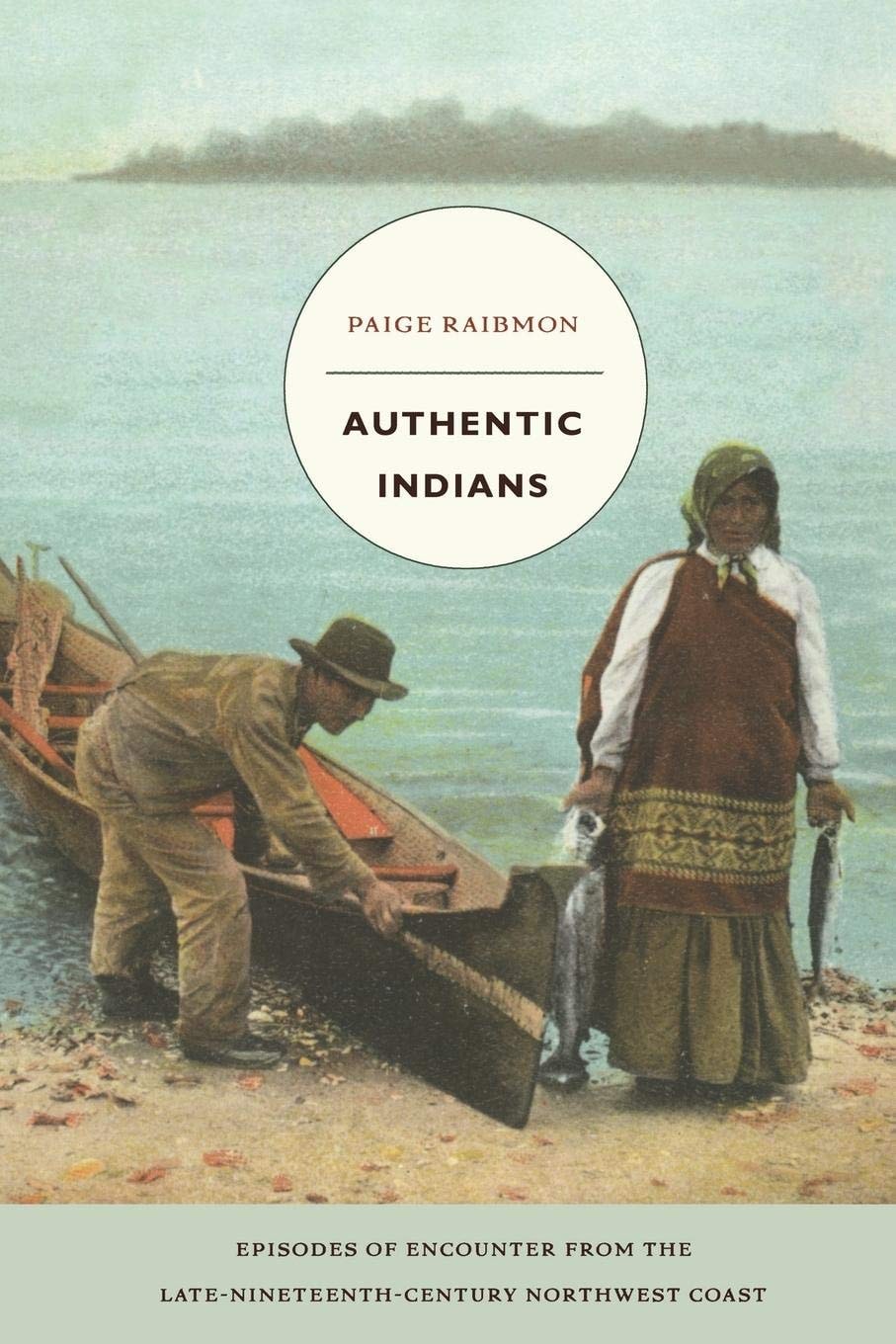
Authentic Indians: Episodes of Encounter from the Late-Nineteenth-Century Northwest Coast (a John Hope Franklin Center Book)
Original price was: $6.88.$3.99Current price is: $3.99.
In this innovative history, Paige Raibmon examines the political ramifications of ideas about “real Indians.” Focusing on the Northwest Coast in the late nineteenth century and early twentieth, she describes how government officials, missionaries, anthropologists, reformers, settlers, and tourists developed definitions of Indian authenticity based on such binaries as Indian versus White, traditional versus modern, and uncivilized versus civilized. They recognized as authentic only those expressions of “Indianness” that conformed to their limited definitions and reflected their sense of colonial legitimacy and racial superiority. Raibmon shows that Whites and Aboriginals were collaborators-albeit unequal ones-in the politics of authenticity. Non-Aboriginal people employed definitions of Indian culture that limited Aboriginal claims to resources, land, and sovereignty, while Aboriginals utilized those same definitions to access the social, political, and economic means necessary for their survival under colonialism.
Drawing on research in newspapers, magazines, agency and missionary records, memoirs, and diaries, Raibmon combines cultural and labor history. She looks at three historical episodes: the participation of a group of Kwakwaka’wakw from Vancouver in the 1893 World’s Columbian Exposition in Chicago; the work of migrant Aboriginal laborers in the hop fields of Puget Sound; and the legal efforts of Tlingit artist Rudolph Walton to have his mixed-race step-children admitted to the white public school in Sitka, Alaska. Together these episodes reveal the consequences of outsiders’ attempts to define authentic Aboriginal culture. Raibmon argues that Aboriginal culture is much more than the reproduction of rituals; it also lies in the means by which Aboriginal people generate new and meaningful ways of identifying their place in a changing modern environment.