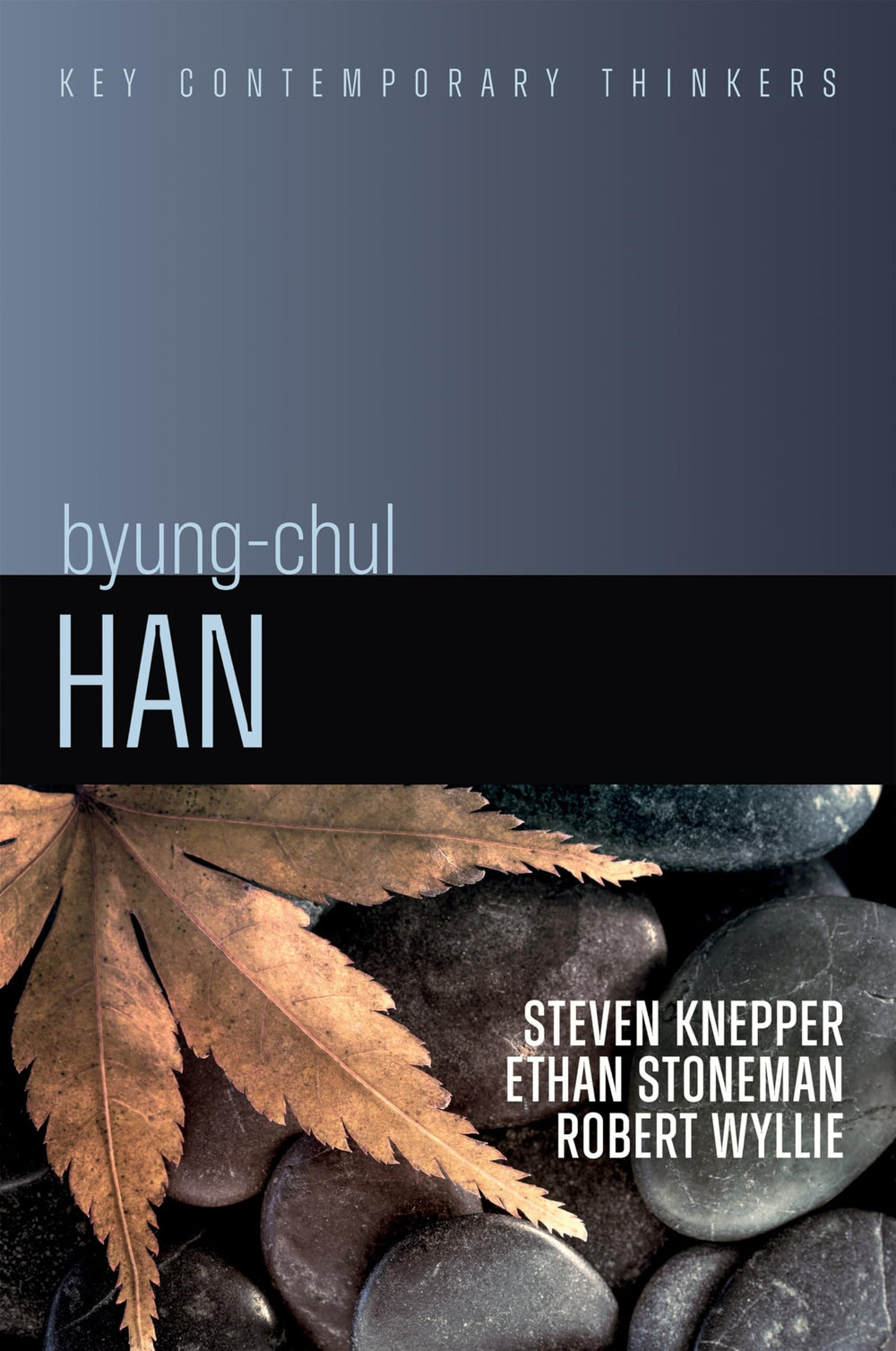
Byung-Chul Han A Critical Introduction
Original price was: $4.48.$2.99Current price is: $2.99.
Byung-Chul Han is one of the most important living philosophers, renowned for his critiques of the digital age. In response to the idea that new technological devices expand our freedom, he argues that they lead to burnout and self-absorption and that we must redevelop contemplative practices which slow us down and open us up. He has brought to his thought forms of deep cosmopolitanism developed from both Zen Buddhism and a renewed Romanticism.
This book is the first critical introduction to Han’s body of work. Knepper, Stoneman, and Wyllie explore Han’s rich oeuvre to date and his incisive contributions to a range of disciplines, including critical theory, media studies, political philosophy, and aesthetics. They unpack his key terms and illustrate his concepts with a range of examples, revealing how the critiques of the “achievement society” and burnout, which have earned Han a global audience, build on his earlier accounts of power, violence, and mood. This broader view addresses the most frequent criticisms of Han and makes a compelling case that he is not only an insightful diagnostician of the present moment but one whose interpretation of both Western and Eastern traditions offers wisdom for navigating the now acute problems of modernity.
This lively book is essential reading for anyone getting to grips with Han’s extraordinary work.