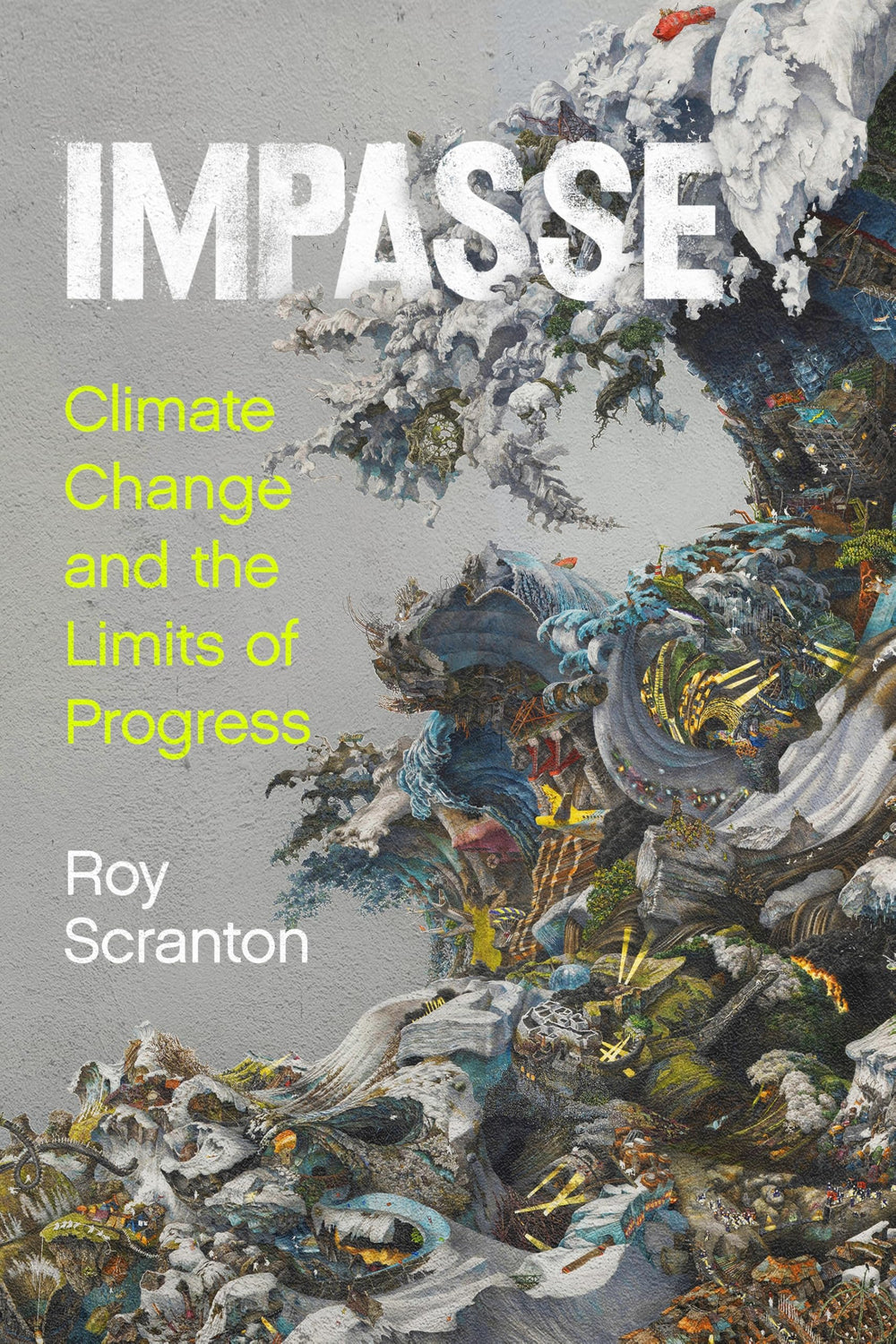
Impasse Climate Change and the Limits of Progress
Original price was: $6.29.$3.99Current price is: $3.99.
A Next Big Idea Club “Must Read” for August 2025!
We need a new realism in the face of global climate catastrophe.
Extreme heat, fires, floods, and storms are transforming our planet. Yet instead of serious responses from world leaders, we get increasing emissions, divisive politics, and ersatz solutions that offer more of the same: more capitalism, more complexity, more “progress.”
The impasse we face is not only political and institutional, but cognitive, existential, and narrative. We’re incapable of grasping the scale, speed, and impact of global warming. Our brains can’t make sense of how radically our world is changing. And we optimistically cling to a civilizational narrative that promises a better tomorrow if we just keep doing what we’re doing.
It’s well past time, Roy Scranton argues, to free ourselves from our dangerous and dogmatic faith in progress. Such unwarranted optimism will only accelerate our collective disintegration. If we want to have any hope at all for the future, it must be grounded in a recognition of human limits–a view Scranton calls ethical pessimism.
Drawing from psychology, philosophy, history, and politics, as well as film, literature, and personal experience, Scranton describes the challenges we face in making sense of our predicament, from problems in communication to questions of justice, from the inherent biases in human perception to the difficulties of empirical knowledge. What emerges is a challenging but ultimately hopeful proposition: if we have the courage to accept our limits, we may find a way to embrace our unknowable future.