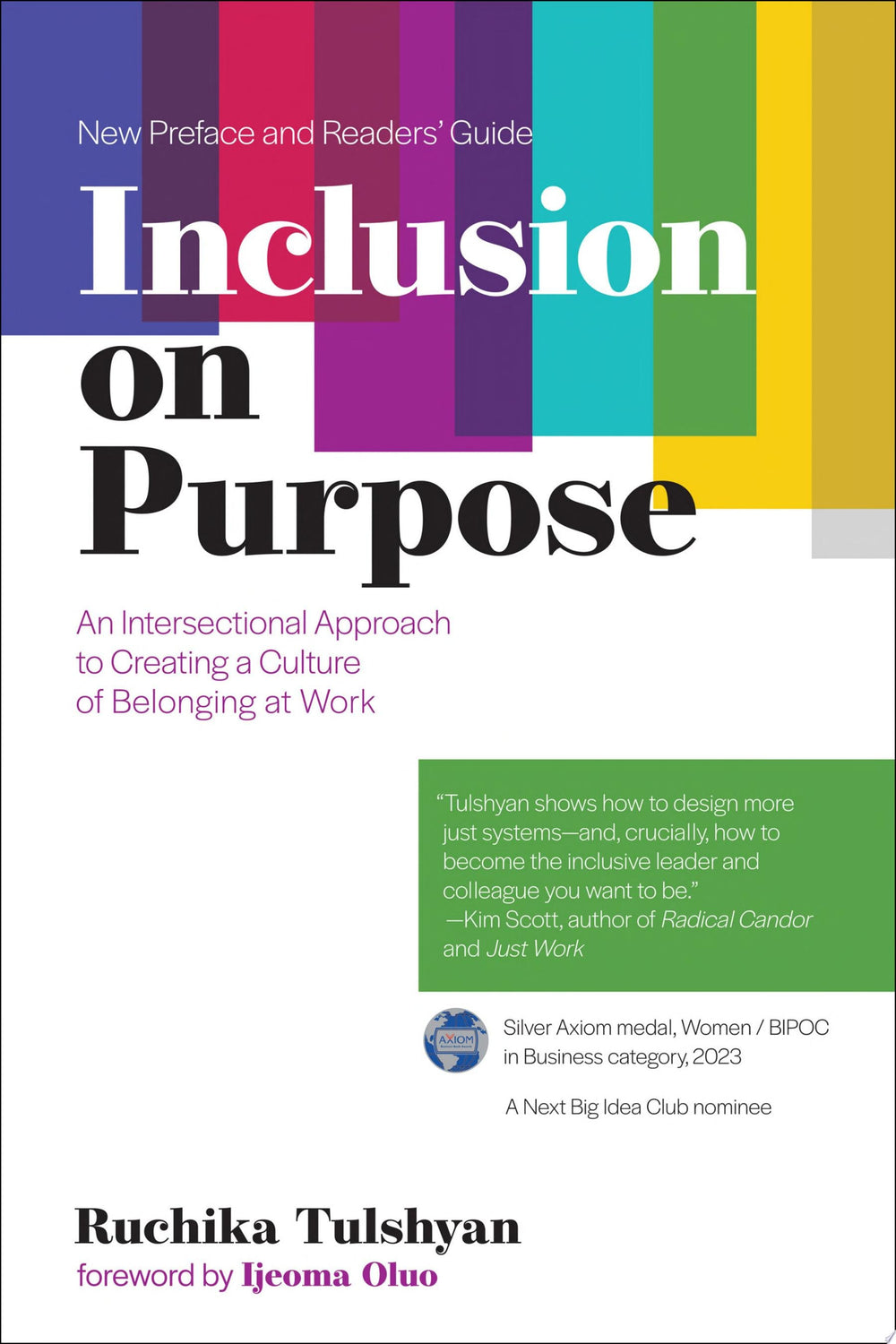
Inclusion on Purpose An Intersectional Approach to Creating a Culture of Belonging at Work
Original price was: $4.48.$2.99Current price is: $2.99.
How organizations can foster diversity, equity, and inclusion: taking action to address and prevent workplace bias while centering women of color.
Few would disagree that inclusion is both the right thing to do and good for business. Then why are we so terrible at it? If we believe in the morality and the profitability of including people of diverse and underestimated backgrounds in the workplace, why don’t we do it? Because, explains Ruchika Tulshyan in this eye-opening book, we don’t realize that inclusion takes awareness, intention, and regular practice. Inclusion doesn’t just happen; we have to work at it. Tulshyan presents inclusion best practices, showing how leaders and organizations can meaningfully promote inclusion and diversity.
Tulshyan centers the workplace experience of women of color, who are subject to both gender and racial bias. It is at the intersection of gender and race, she shows, that we discover the kind of inclusion policies that benefit all. Tulshyan debunks the idea of the “level playing field” and explains how leaders and organizations can use their privilege for good by identifying and exposing bias, knowing that they typically have less to lose in speaking up than a woman of color does. She explains why “leaning in” doesn’t work-and dismantling structural bias does; warns against hiring for “culture fit,” arguing for “culture add” instead; and emphasizes the importance of psychological safety in the workplace-you need to know that your organization has your back. With this important book, Tulshyan shows us how we can make progress toward inclusion and diversity-and we must start now.