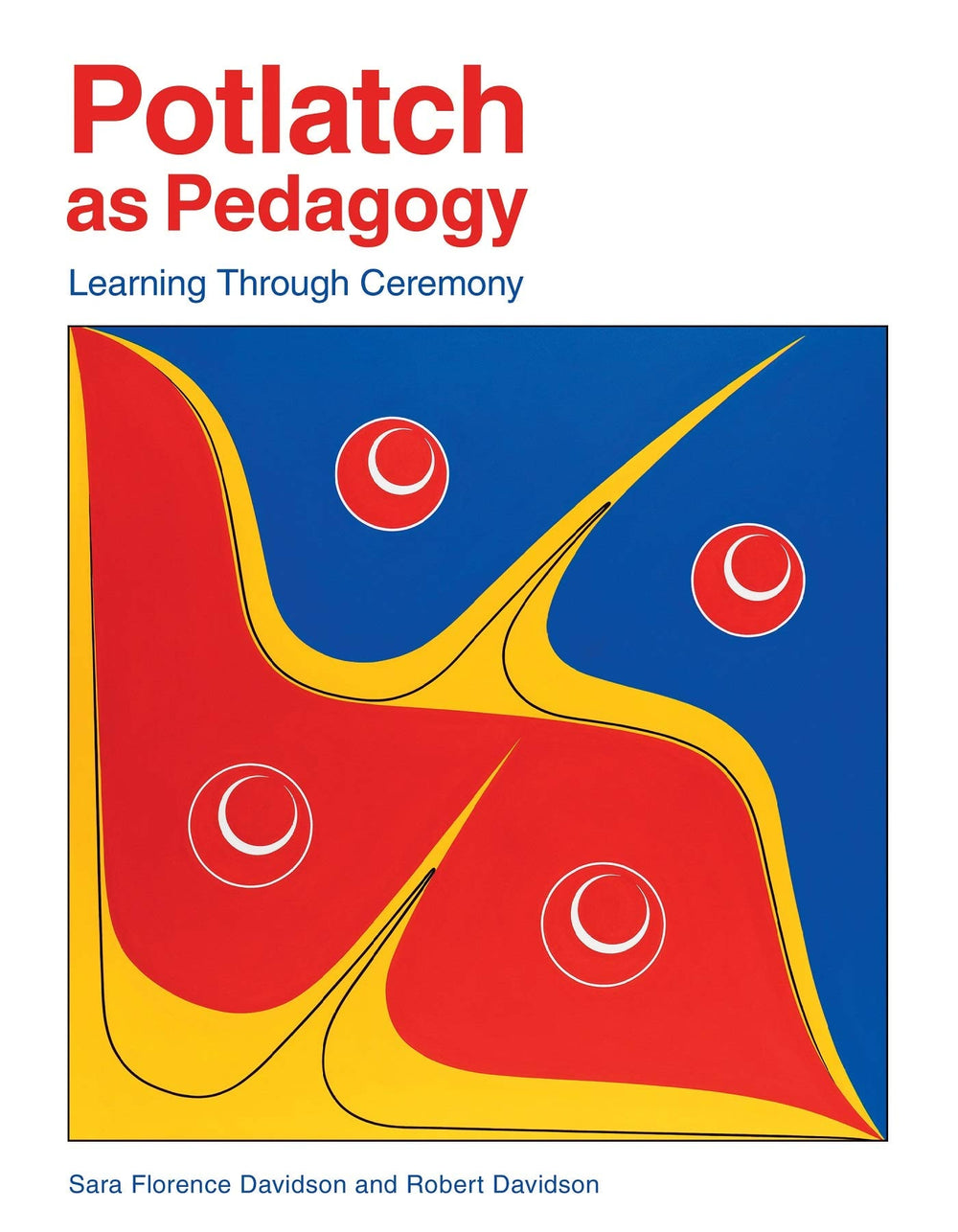
Potlatch as Pedagogy Learning Through Ceremony
Original price was: $4.19.$2.99Current price is: $2.99.
In 1884, the Canadian government enacted a ban on the potlatch, the foundational ceremony of the Haida people. The tradition, which determined social structure, transmitted cultural knowledge, and redistributed wealth, was seen as a cultural impediment to the government’s aim of assimilation.
The tradition did not die, however; the knowledge of the ceremony was kept alive by the Elders through other events until the ban was lifted. In 1969, a potlatch was held. The occasion: the raising of a totem pole carved by Robert Davidson, the first the community had seen in close to 80 years. From then on, the community publicly reclaimed, from the Elders who remained to share it, the knowledge that has almost been lost.
Sara Florence Davidson, Robert’s daughter, would become an educator. Over the course of her own education, she came to see how the traditions of the Haida practiced by her father–holistic, built on relationships, practical, and continuous–could be integrated into contemporary educational practices. From this realization came the roots for this book.