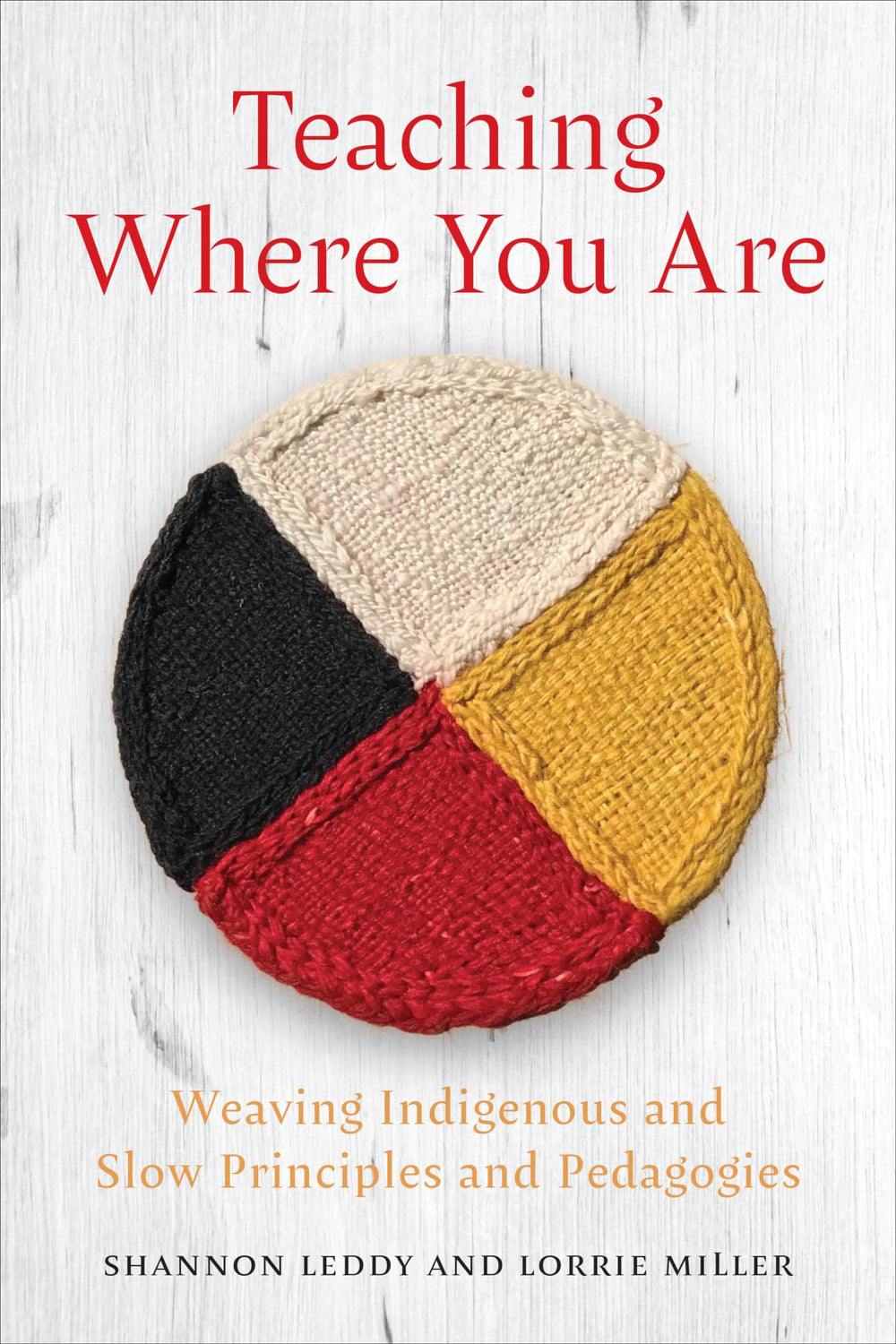
Teaching Where You Are: Weaving Indigenous and Slow Principles and Pedagogies
Original price was: $4.93.$2.99Current price is: $2.99.
Teaching Where You Are offers a guide for non-Indigenous educators to work in good ways with Indigenous students and provides resources across curricular areas to support all students. In this book, two seasoned educators, one Indigenous and one settler, bring to bear their years of experience teaching in elementary, secondary, and post-secondary contexts to explore the ways in which Indigenous and Slow approaches to teaching and learning mirror and complement one another.
Using the holistic framework of the Medicine Wheel, Shannon Leddy and Lorrie Miller illustrate the ways in which interdisciplinary thinking, a focus on experiential learning, and the thoughtful application of the 4Rs – Respect, Relevance, Reciprocity, and Responsibility – can bring us back to the principle of teaching people, not subjects. Bringing forth the ways in which colonialism and cognitive imperialism have shaped Canadian curriculum and consciousness, the book offers avenues for the development of decolonial literacy to support the work of Indigenizing education. In considering the importance of engaging in decolonizing and Indigenizing approaches to education through Slow and Indigenous pedagogies using the lens of place-based and land-based education, Teaching Where You Are presents a text useful for teachers and educators grappling with the ongoing impacts of colonialism and the soul-work of how to decolonize and rehumanize education in meaningful ways.