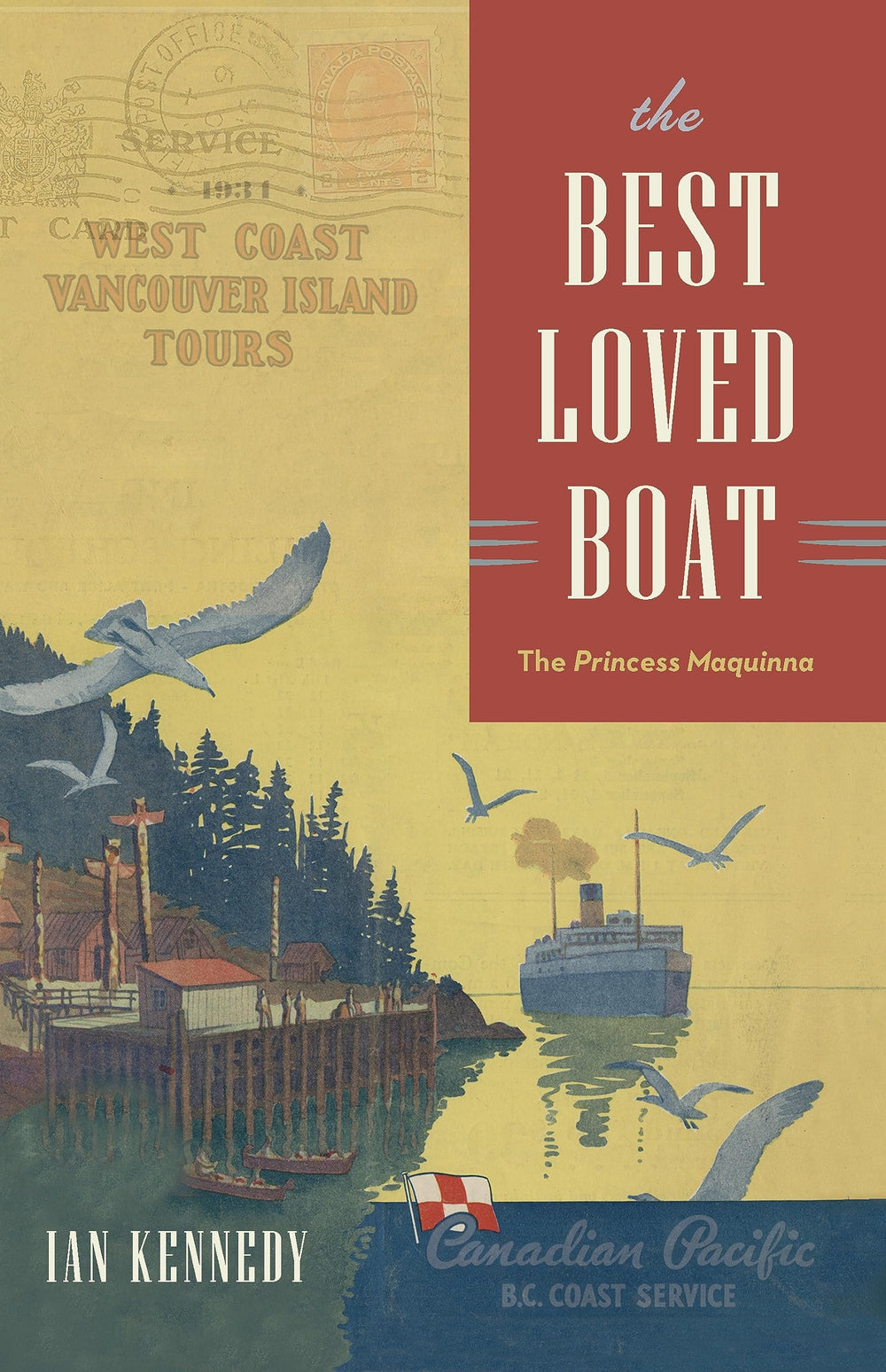
The Best Loved Boat The Princess Maquinna
Original price was: $5.23.$2.99Current price is: $2.99.
Built in 1913, the Canadian Pacific Railway’s ship Princess Maquinna steamed up and down the rugged west coast of Vancouver Island in summer and winter, calm weather and storms, for over forty years, and has become one of the most beloved boats in BC’s maritime history.
Princess Maquinna, sometimes referred to as the “Ugly Princess” but most often “Old Faithful,” transported Indigenous people, settlers, missionaries, loggers, cannery workers, prospectors and travellers of all kinds up and down Vancouver Island’s rugged and dangerous west coast, stopping at up to forty ports of call on her seven-day run. The Princess Maquinna faithfully served as the lifeline for all those who lived on the west coast of Vancouver Island before it became accessible by roads. Because of this strong connection she became the “Best Loved Boat” in BC’s maritime history. Kennedy recounts battles through eighty-knot gales along the exposed coastline sailors called “The Graveyard of the Pacific,” and reveals the bigotry that forced Indigenous and Chinese passengers to remain on the foredeck of the ship while other passengers sheltered from the elements inside. He brings the history of this beloved ship to life with rich detail, recalling a time when this remote part of British Columbia was alive with mines, canneries and now-forgotten settlements.