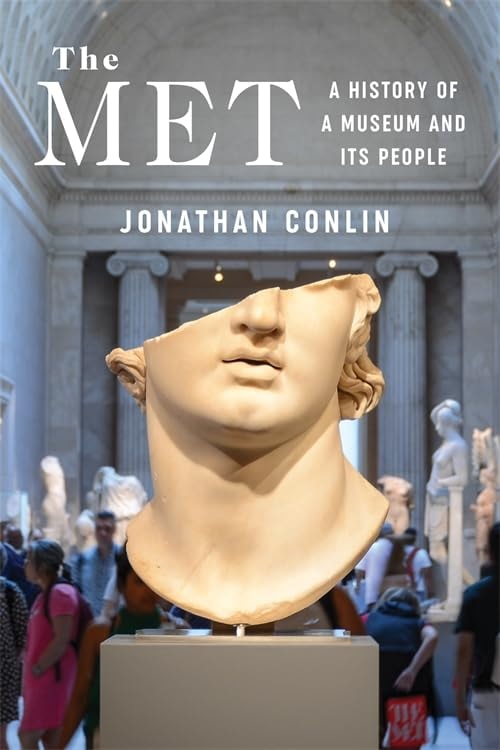
The Met A History of a Museum and Its People
Original price was: $5.54.$2.99Current price is: $2.99.
“The Met is one of the greatest museums in the world, housing the artifacts whose images are instantly recognizable ciphers of civilization. But what about those who made and restored, bought and sold, catalogued, guarded and visited those artifacts? In The Met, historian Jonathan Conlin has mined the papers of directors and trustees, curation and secretary archives, municipal records, and oral histories to compile the first scholarly, single-author survey of the 150-year-old institution. This is a history of the Met that runs counter to the great-man style institutional biographies that are typical of museums: looking at the tenures of directors and curators as top-down histories. Instead, Conlin looks at the people and forces inside and outside the Met that shaped it and its collections. The Met is a window through which we can see New York history, art history, colonial politics, Anglo-American relations, and more. He ventures beyond the Met’s walls to trace its far-reaching impact, without neglecting the great collectors and curators or all the communities who made the Met their own: Black and white, rich and poor, young and old, Manhattanites and tourists. The Met is the story of the people behind and in front of the familiar objects. The story of how a diverse set of communities in the “third great city of the civilized world” collected an astonishing wealth of remarkable objects and made them their own. This is an episodic history capturing pivotal moments in the birth and growth of the Met: the initial European acquisitions swept up during the calamities of the Franco-Prussian War; the infighting within the American art and museum scene at the close of the nineteenth century; the railroad baron benefactors and board members who changed the Met’s style of art connoisseurship; the ideas of Americanness that emerged during the isolationist period after World War I, which slowed European art acquisitions; the colonial looting of Egyptian artifacts and their route to British and American museums; and all the other tensions between social class, old money and new money, schools of art, old world and new world, modernity and tradition that played out in the curation of the museum’s exhibits”–