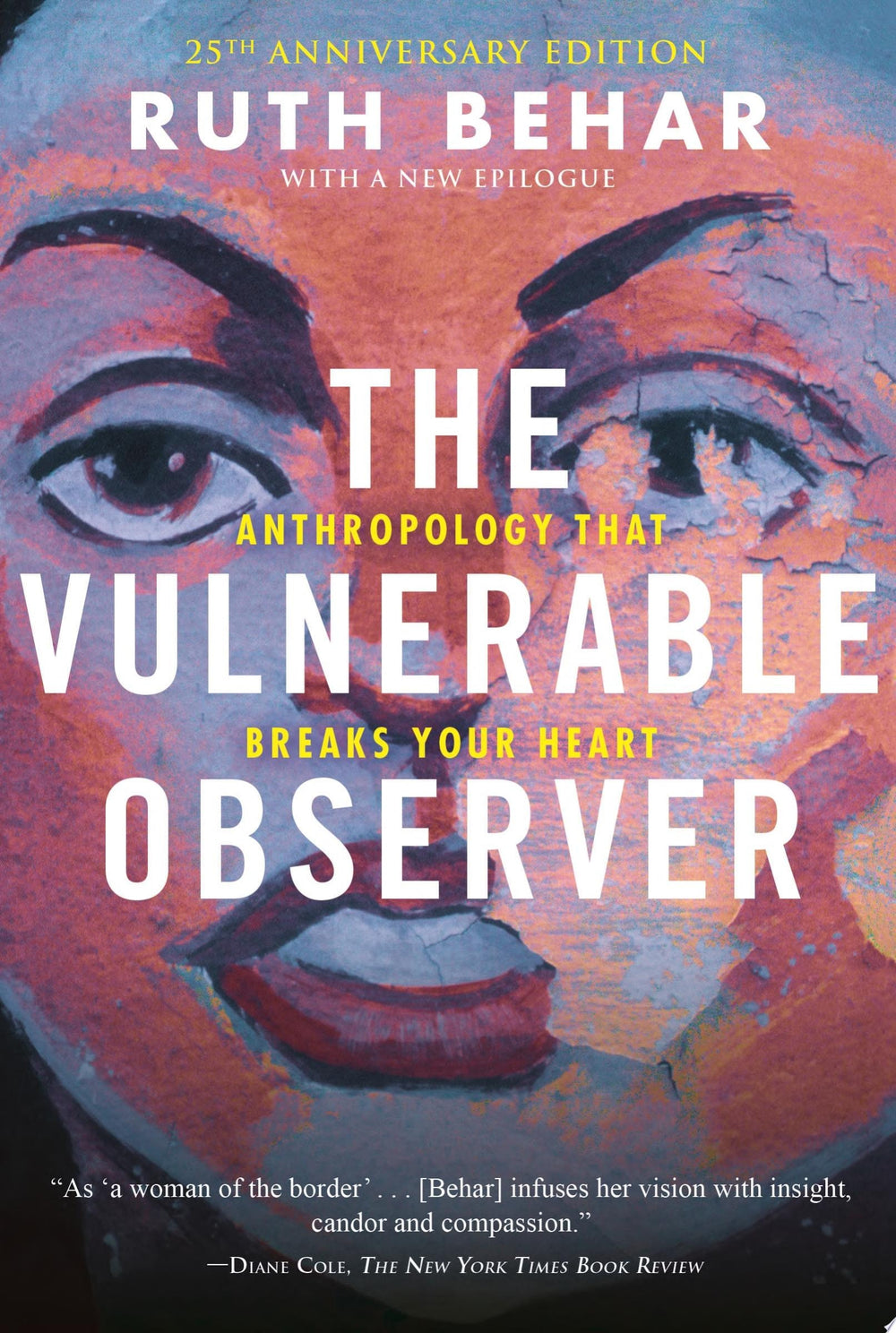
The Vulnerable Observer Anthropology That Breaks Your Heart
Original price was: $3.74.$1.99Current price is: $1.99.
The 25th-anniversary edition of the groundbreaking book that changed anthropology, asserting that ethnographers needn’t exclude themselves or their vulnerabilities from their work
In a new epilogue to this classic work, renowned ethnographer and storyteller Ruth Behar reflects on the groundbreaking impact The Vulnerable Observer has had on anthropology, sociology, and psychology and on scholarly writing. A pocket companion for writers, journalists, documentarians, and activists alike, this book speaks to the power of including oneself in the story, bringing deeper meaning to the relationship between writer, subject, and reader.
In a move revolutionary for its time, The Vulnerable Observer proposed a new theory and practice for humanistic anthropology. No longer should ethnographers write at a distance, clad in their shroud of “objectivity.” In six luminous essays, Behar calls instead for a fresh approach to ethnography, one that is lived and written more openly. Through this very personal account, readers can travel and relate to other peoples and the world around them.
Eloquently interweaving ethnography and memoir, Behar encourages her readers to be open about their experiences, as open as their subjects are with them. She does so in the hope that this work will lead us toward greater depth of understanding and feeling, not only in anthropology but in all efforts to document the shared vulnerability of the observed and the observer.