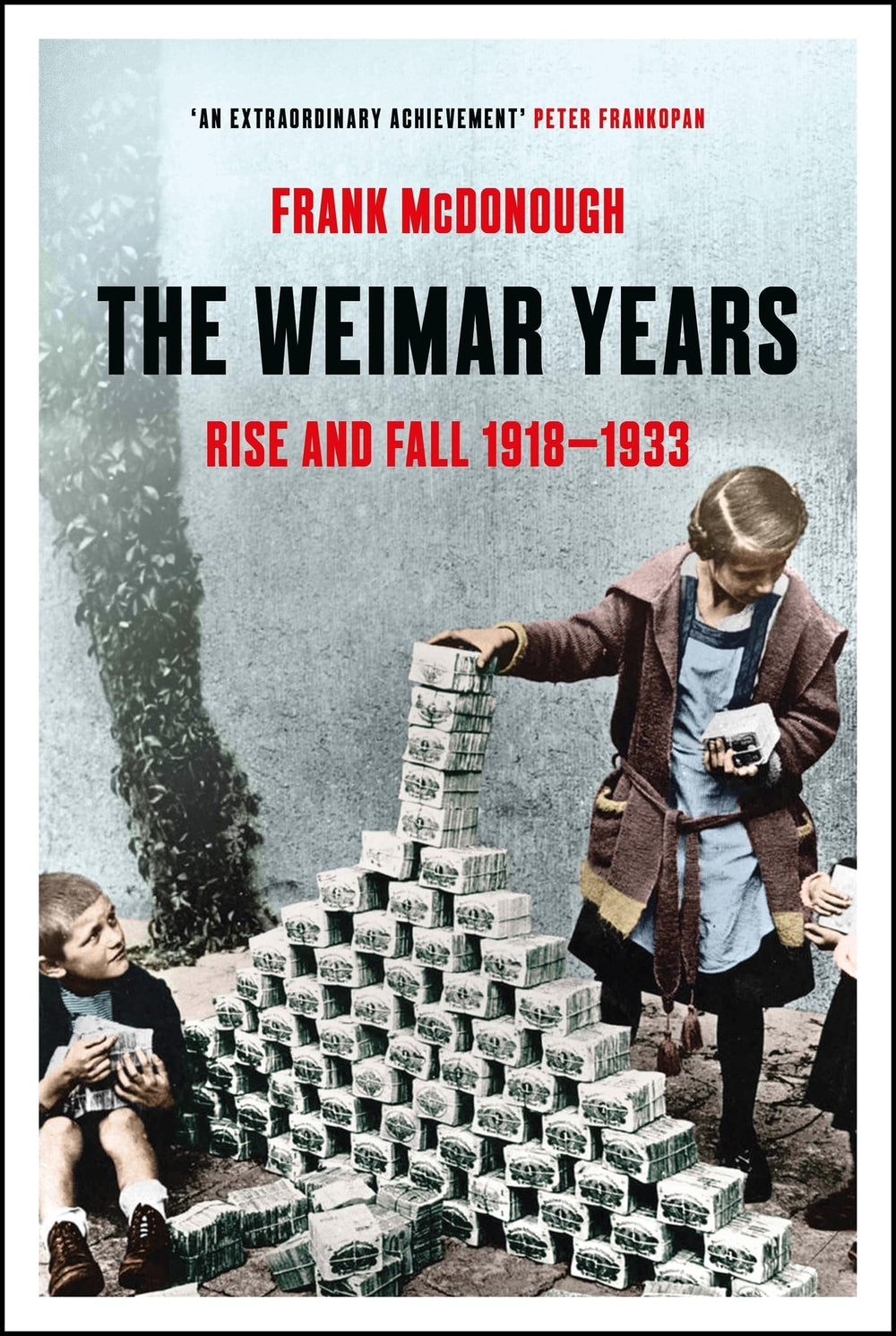
The Weimar Years Rise and Fall 1918-1933
Original price was: $8.98.$4.99Current price is: $4.99.
A DAILY MAIL BOOK OF THE WEEK
A SPECTATOR BOOK OF THE YEAR
A DAILY TELEGRAPH BEST HISTORY BOOK OF 2023
ASPECTS OF HISTORY BOOKS OF THE YEAR
A GUARDIAN BOOK OF THE YEAR 2023
A DAILY MAIL BEST CHRISTMAS BOOK OF 2023
Established in 1918-19, in the wake of Germany’s catastrophic defeat in the First World War and the revolution that followed swiftly on its heels, the Weimar Republic ushered in widespread social reform, a radical cultural flowering and the most democratic conditions the German people had ever known.
At its beginning, Weimar held out the hope that democracy, stability and prosperity would take root in Germany, but it was beset by frequent changes of government, waves of economic upheaval and spasms of violence of increasing intensity between the forces of left and right. Agitation and assassination by rightwing nationalists – enraged by the severity of the Treaty of Versailles and the acceptance of its terms by liberal German politicians – formed a threatening descant to the conciliatory efforts of successive coalition governments. Ultimately, the instabilities of Weimar would lead to the appointment as German Chancellor of the Nazi Fu ̈hrer Adolf Hitler, who created a one-party dictatorship that abandoned the rule of law, democracy and civil rights. In the words of Gustav Stresemann, Germany’s Nobel Peace Prize-winning Foreign Minister from 1923 to 1929, Weimar democracy was ‘dancing on a volcano’.
The Weimar Years is a vivid and compelling narrative of a dramatic period in German history. Year by year, from 1918 to 1933, Frank McDonough covers the major events in both domestic and foreign policy and the personalities who shaped them, together with developments in music, art, theatre and literature. McDonough places particular focus on the parliamentary history of Weimar, arguing that it was the failure of parliamentary democracy to bring stability that eroded public confidence and allowed the power of the elected Reichstag to gradually diminish, culminating in Hitler’s accession to power in January 1933.
The Weimar Years is the tragic story of a rise and fall, as well as a warning of how, under poor leadership, economic pressure and unrelenting political volatility, a democracy can drift towards a form of authoritarian rule that eventually destroys it.